
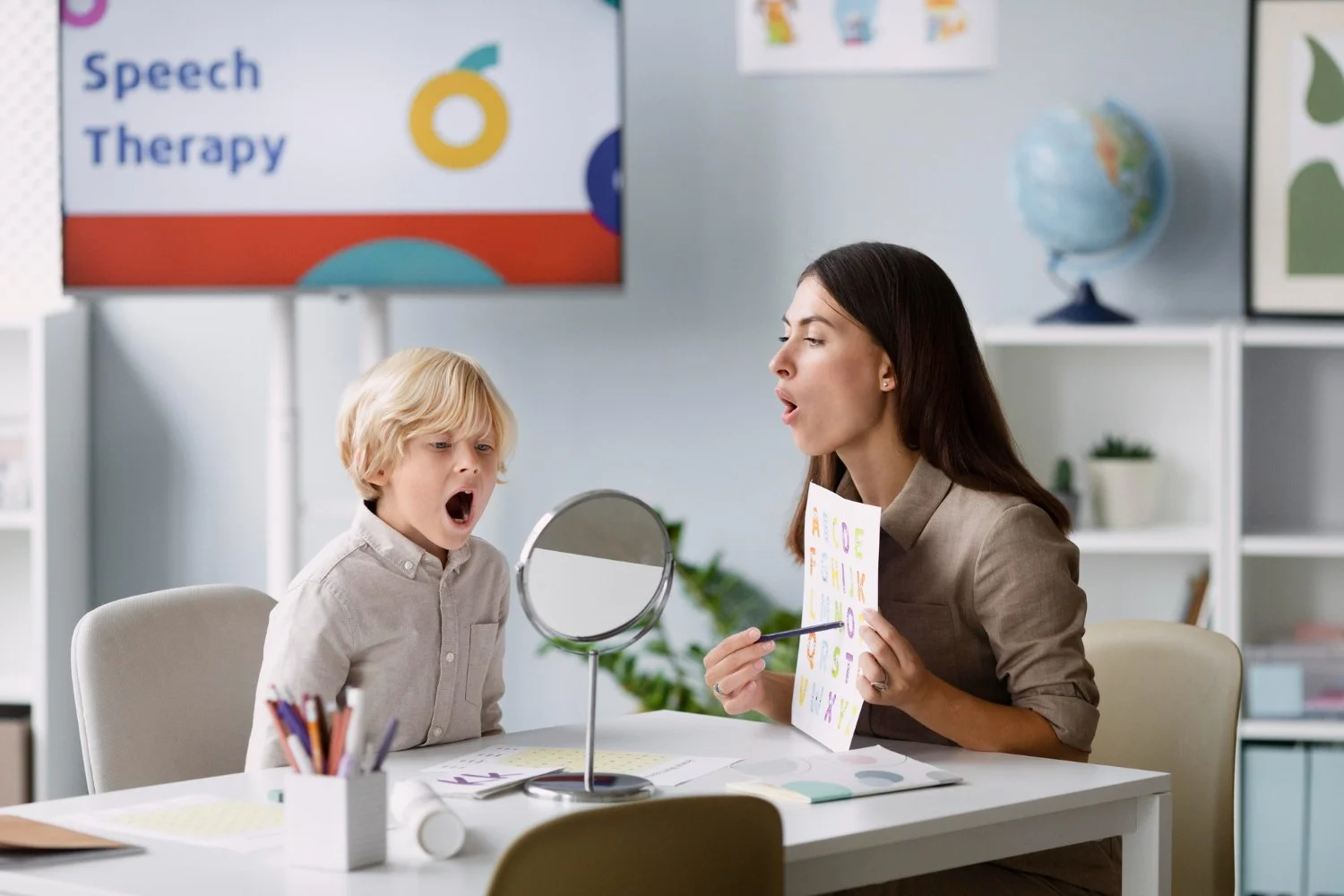
Every child develops communication skills at their own pace. Some children are early talkers, while others take a little longer to find their words. But sometimes, differences in communication can be a sign that your child would benefit from some extra support.
A speech pathologist can help you understand what is happening, answer your questions, and provide practical strategies to support your child's communication at home and in everyday life.
What signs should you look out for?
There is no single checklist that determines whether a child needs speech therapy. However, it may be worth having a chat with a speech pathologist if you notice some of the following:
Your child isn't using as many words as expected
If your child is using very few words, isn't combining words, or seems to have stopped developing new vocabulary, it can be helpful to seek advice. A speech pathologist can look at your child's overall communication and help identify what support may be useful.
It's difficult to understand what your child is saying
Some speech sounds develop later than others, but if you regularly find yourself struggling to understand your child, especially as they get older, an assessment can help determine whether their speech development is on track.
Your child seems frustrated when communicating
Frequent frustration, tantrums, or withdrawing because they can't communicate what they want may indicate that your child is having difficulty expressing themselves. Supporting communication skills can help children feel more confident and understood.
Your child has difficulty understanding instructions
Communication isn't only about talking. Children also need to understand words, questions and instructions. If your child often seems unsure about what is being asked of them or has difficulty following simple directions, it may be worth seeking professional advice.
Your child isn't joining in conversations
Some children find it difficult to take turns, answer questions, start conversations, or stay engaged when communicating with others. These social communication skills are an important part of connecting with family, educators and other children.
Your child has difficulty communicating their needs
If your child regularly relies on pointing, gestures, crying, or taking you to what they want rather than using words or other communication methods, a speech pathologist can explore ways to make communication easier and more effective.
What if you're simply unsure?
You don't need to wait until you're certain there is a problem.
If something about your child's communication doesn't feel quite right, having a conversation with a speech pathologist can give you reassurance, guidance and a clearer understanding of your child's individual development.
Early support can also give parents and caregivers practical strategies they can use during everyday routines such as play, mealtimes, getting dressed, reading books and going out.
Every child communicates differently
The goal of speech pathology isn't to make every child communicate in exactly the same way. It's about helping children develop the communication skills they need to express themselves, understand others and participate confidently in everyday life.
If you're wondering whether your child's communication is developing as expected, it's always okay to ask for advice. A conversation with a speech pathologist can be a simple first step towards understanding what your child needs and how you can support them.
If you have concerns about your child's communication, consider speaking with a qualified speech pathologist for individual advice and assessment.
